Indira Gandhi Institute of Development Research Highlights 2025
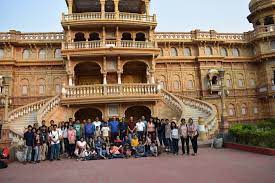
Indira Gandhi Institute of Development Research is a premier research institute in Mumbai dedicated to advanced study and research in development economics and social sciences. In 2025, the institute continues to focus on interdisciplinary research addressing economic growth, poverty, inequality, and sustainability. IGIDR collaborates with national and international organizations to influence policy and development programs. The campus is equipped with modern facilities, including a well-stocked library and computer labs. The institute regularly hosts seminars, workshops, and conferences to promote academic exchange. IGIDR’s faculty includes leading economists and social scientists engaged in impactful research. It also emphasizes training young scholars to contribute meaningfully to development policy. The institute’s reputation attracts students and researchers from across India and abroad.
Here are the key highlights of the Indira Gandhi Institute of Development Research
|
Highlights
|
Details
|
|
Established | 1987 |
|
Type
|
Deemed to be University
|
|
Location
|
Mumbai, Maharashtra
|
|
Focus Area
|
Development Economics, Social Sciences
|
|
Accreditation
|
UGC
|
|
Collaborations
|
RBI, Government Bodies, International Agencies
|
|
Mode of Education
|
Full-time, Research-oriented
|
Indira Gandhi Institute of Development Research Courses and Fees 2025
Indira Gandhi Institute of Development Research offers doctoral programs such as Ph.D. in Economics and Development Studies, along with M.Phil. courses in development economics. The fee structure for these programs is generally affordable, with most students receiving fellowships or financial aid. The curriculum integrates theoretical knowledge with practical research, covering topics like macroeconomics, microeconomics, econometrics, and policy analysis. IGIDR also offers short-term courses and workshops for professionals and researchers. Admissions require a strong academic background and competitive test scores. The institute provides state-of-the-art research facilities to support students’ academic endeavors. Detailed fee information is available on the official IGIDR website. Financial assistance options help ensure accessibility to deserving candidates.
Here are the Indira Gandhi Institute of Development Research Courses and Fees details
Course | Duration | Fees (Approx.) |
Ph.D. in Development Studies | 4-5 years | ₹1,00,000 approx. |
M.Phil in Economics | 2 years | ₹1,00,000 approx. |
M.Sc. Economics & Finance | 2 years | ₹2,00,000 approx. |
Indira Gandhi Institute of Development Research Popular Programes 2025
Popular programs at Indira Gandhi Institute of Development Research include the Ph.D. in Economics and Development Studies, which attract students interested in research and policy-making careers. The M.Phil. program serves as a stepping stone for doctoral studies and research roles. These programs emphasize empirical analysis, quantitative methods, and interdisciplinary approaches to development issues. Students gain exposure to real-world economic challenges through field studies and collaborative projects. IGIDR’s strong research culture and experienced faculty make these programs highly sought after. Graduates often pursue careers in academia, government agencies, international organizations, and think tanks. The institute encourages participation in national and international conferences. Continuous curriculum updates keep the programs relevant and rigorous.
Here are the popular programs of the Indira Gandhi Institute of Development Research
Programme | Area of Study |
Ph.D. in Development Studies | Economics, Development, Social Sciences |
M.Phil in Economics | Advanced Economic Theory and Applications |
M.Sc. Economics & Finance | Economics, Finance, Quantitative Techniques |
Indira Gandhi Institute of Development Research Application Process 2025
The application process for Indira Gandhi Institute of Development Research in 2025 is conducted online via the official institute website. Candidates must register and complete the application form, submitting academic transcripts, identification proof, and other required documents. An application fee is applicable, payable online. Entrance exams such as UGC-NET or GATE may be required depending on the program. Shortlisted candidates may be called for interviews or written tests. Important deadlines and instructions are clearly communicated on the admission portal. Applicants should regularly check the website for updates. Proper preparation and timely submission of documents improve chances of selection.
Here is the application process for the Indira Gandhi Institute of Development Research
Step | Details |
Step 1 | Visit official IGIDR website |
Step 2 | Register and fill out online application form |
Step 3 | Upload academic documents and ID proof |
Step 4 | Pay application fee |
Step 5 | Submit application |
Step 6 | Download admit card (if applicable) |
Step 7 | Appear for entrance test/interview |
Indira Gandhi Institute of Development Research Admission 2025
Admission at Indira Gandhi Institute of Development Research is merit-based, relying on entrance exam scores, academic performance, and interviews. The institute seeks candidates with strong quantitative skills and research aptitude. Shortlisted applicants undergo a rigorous selection process to assess their suitability for advanced study and research. Final admission offers consider reservation policies as per government norms. Candidates must confirm their seats by completing the necessary formalities within the specified deadlines. IGIDR promotes a diverse academic community by admitting students from various backgrounds. Detailed admission guidelines and counseling schedules are available online. The institute ensures transparency and fairness throughout the process.
Here are the Indira Gandhi Institute of Development Research Admission details
Admission Criteria | Details |
Eligibility | Relevant graduation/post-graduation in economics or related fields |
Entrance Exam | IGIDR entrance test / Interviews |
Merit List | Based on entrance exam/interview performance |
Reservation | As per Government of India norms |
Counseling | Conducted after merit list declaration |
Indira Gandhi Institute of Development Research Cutoff 2025
Cutoff scores for Indira Gandhi Institute of Development Research admissions in 2025 depend on the program and the number of applicants. Generally, cutoffs are based on national level exam scores like UGC-NET, GATE, or JAM, and academic records. Due to high competition, cutoffs for popular programs tend to be strict. Reserved category candidates benefit from relaxation in cutoff criteria according to government regulations. The institute publishes official cutoff lists after evaluating applications and exam results. Meeting the cutoff does not guarantee admission but is essential for shortlist consideration. Candidates are advised to prepare thoroughly to exceed the cutoff marks. Updated cutoff details are available on the IGIDR admissions webpage.
Here are the cutoffs at the Indira Gandhi Institute of Development Research
Programme | Expected Cutoff/Criteria |
M.Sc. Economics & Finance | Minimum 60% marks or IGIDR entrance score cutoff |
M.Phil Economics | Entrance exam and interview cutoff |
Ph.D. Development Studies | Interview and research proposal evaluation |
Indira Gandhi Institute of Development Research Placement 2025
Indira Gandhi Institute of Development Research placement cell actively supports students in securing research and academic positions in universities, think tanks, government bodies, and international organizations. While primarily a research institute, IGIDR graduates are well-prepared for policy analysis, economic consulting, and development projects. The placement team organizes workshops on resume building, interview skills, and career guidance. Many students obtain internships and fellowships that enhance their professional prospects. Alumni networks also help in job referrals and mentorship. The institute fosters collaborations with various agencies to widen employment opportunities. Average placement packages vary based on sector and role. IGIDR remains committed to facilitating successful career outcomes for its graduates.
Here are the placements of the Indira Gandhi Institute of Development Research
Placement Aspect | Details |
Placement Cell | Dedicated placement support |
Average Package | ₹8-12 LPA |
Highest Package | ₹18+ LPA |
Placement Rate | Around 85%-90% |
Internship Opportunities | Available with governmental and international organizations |
Indira Gandhi Institute of Development Research Scholarships 2025
Indira Gandhi Institute of Development Research offers scholarships and financial aid to meritorious and economically disadvantaged students in 2025. These include fellowships funded by the institute and grants from government and private organizations. Special scholarships are available for reserved category candidates and those with exceptional academic records. Financial support covers tuition fees, research expenses, and living stipends. The institute encourages early application for scholarships alongside admission. Students may also apply for external funding to supplement their income. Transparent criteria and timely disbursement ensure effective aid distribution. Detailed information on scholarship eligibility and application procedures is available on the official IGIDR website.
Here is the Indira Gandhi Institute of Development Research Scholarship
Scholarship Type | Eligibility Criteria | Benefits |
Institute Fellowship | For Ph.D. and M.Phil candidates | Monthly stipend, contingency grant |
Merit-based Scholarships | Based on academic performance | Tuition fee waiver, stipend |
Government Scholarships | For reserved categories and needy students | Full/partial fee waiver |
External Scholarships | Sponsored by Government and NGOs | Varies |

 Mumbai, Maharashtra
 Deemed University
 1987
1987
 UGC, NAAC
 Notification



![Dev Bhoomi Uttarakhand University - [DBUU], Dehradun](https://cdn.universitykart.com//Content/upload/admin/lsfohlb4.1j1.png)




 back
back